

Description
DESCRIPTION
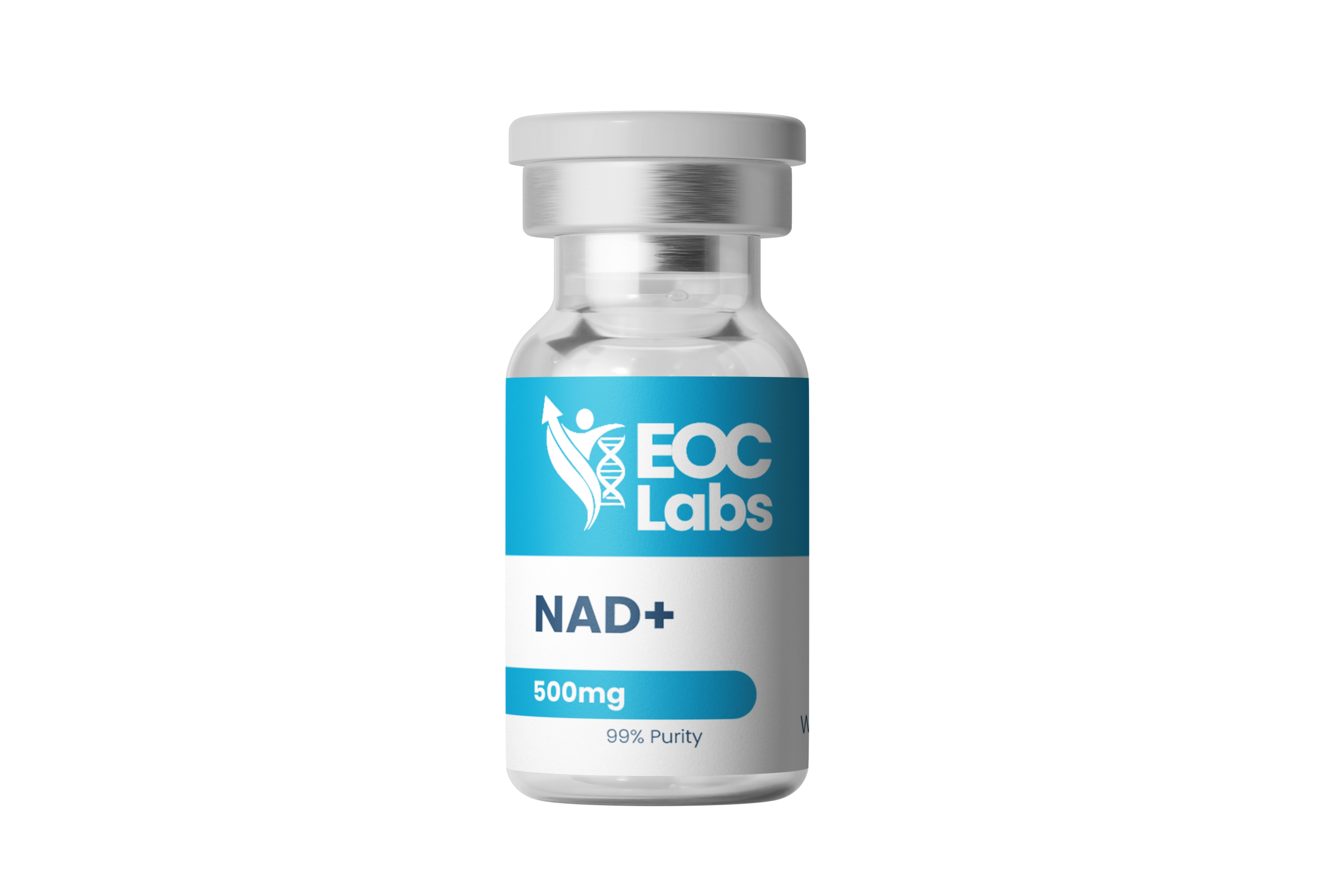
NAD+ (Nicotinamide Adenine Dinucleotide) is an essential pyridine nucleotide that functions as a central cofactor in cellular energy metabolism, redox reactions, mitochondrial ATP production, DNA repair, sirtuin activation, and cellular-stress signaling. It plays a key role in pathways involving oxidative phosphorylation, PARP-dependent DNA-repair mechanisms, and age-related metabolic decline. Research applications include mitochondrial biology, neuroprotection, metabolic regulation, and genomic stability.
LYOPHILIZED PEPTIDES
This compound is provided in a lyophilized form to preserve structural integrity, purity, and long-term molecular stability. No fillers or excipients are used during lyophilization.
RESEARCH APPLICATIONS
1 — Mitochondrial Function & Cellular Energy Metabolism
NAD+ is widely studied for its role in mitochondrial oxidative phosphorylation, electron-transport-chain activity, and ATP synthesis. Research examines how NAD+ levels influence mitochondrial efficiency, metabolic flexibility, and cellular survival during stress.
(References: Nature—https://www.nature.com/articles/s41586-018-0645-6, PubMed—https://pubmed.ncbi.nlm.nih.gov/25738459/ )
2 — Sirtuin Activation, DNA Repair & Longevity Pathways
NAD+ is required for PARP-mediated DNA repair and sirtuin-dependent chromatin remodeling. Studies evaluate its effects on genomic stability, cellular senescence, epigenetic regulation, and aging-related biochemical pathways.
(References: ScienceDirect—https://www.sciencedirect.com/science/article/pii/S155041311630192X, PubMed—https://pubmed.ncbi.nlm.nih.gov/31578236/ )
3 — Neuroprotection & Oxidative-Stress Response
Research models show NAD+ involvement in neuronal survival, ischemia-response mechanisms, mitochondrial ROS regulation, and bioenergetic recovery pathways. NAD+-dependent enzymes are key components of neurological resilience.
(References: Frontiers—https://www.frontiersin.org/articles/10.3389/fncel.2018.00002/full, PubMed—https://pubmed.ncbi.nlm.nih.gov/33394327/ )
SPECIFICATIONS
Property | Details
Compound Name | Nicotinamide Adenine Dinucleotide (NAD+)
Chemical Class | Pyridine nucleotide cofactor
CAS Number | 53-84-9
Molecular Formula | C21H27N7O14P2
Molecular Weight | 663.43 g/mol
Appearance | White to off-white lyophilized powder
Purity | ≥ 99% (HPLC verified)
Solubility | Soluble in sterile/bacteriostatic water
Storage | Store dry at 2–8 °C; after reconstitution refrigerate
Usage | Laboratory research only
Research Data & References
– Mitochondrial activity & ATP regulation: https://pubmed.ncbi.nlm.nih.gov/25738459/
– DNA repair & sirtuin regulation: https://pubmed.ncbi.nlm.nih.gov/31578236/
– Neuroprotective oxidative-stress models: https://pubmed.ncbi.nlm.nih.gov/33394327/
Research Disclaimer
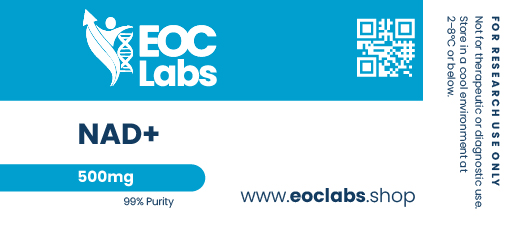
RESEARCH USE ONLY.
This product is not intended for therapeutic or diagnostic use. EOC Labs products are sold strictly for laboratory research and analytical purposes only. All information provided by EOC Labs, including descriptions, references, and technical data, is intended solely for educational and informational purposes. Statements have not been evaluated by the U.S. Food and Drug Administration (FDA). No claims are made for any medical or consumer application. By purchasing this product, the buyer certifies that it will be handled by qualified professionals in a properly equipped laboratory and used in compliance with all applicable local, state, and federal laws and regulations.

 20% off (first time buyer sign up).
There are no reviews yet.