

Description
DESCRIPTION
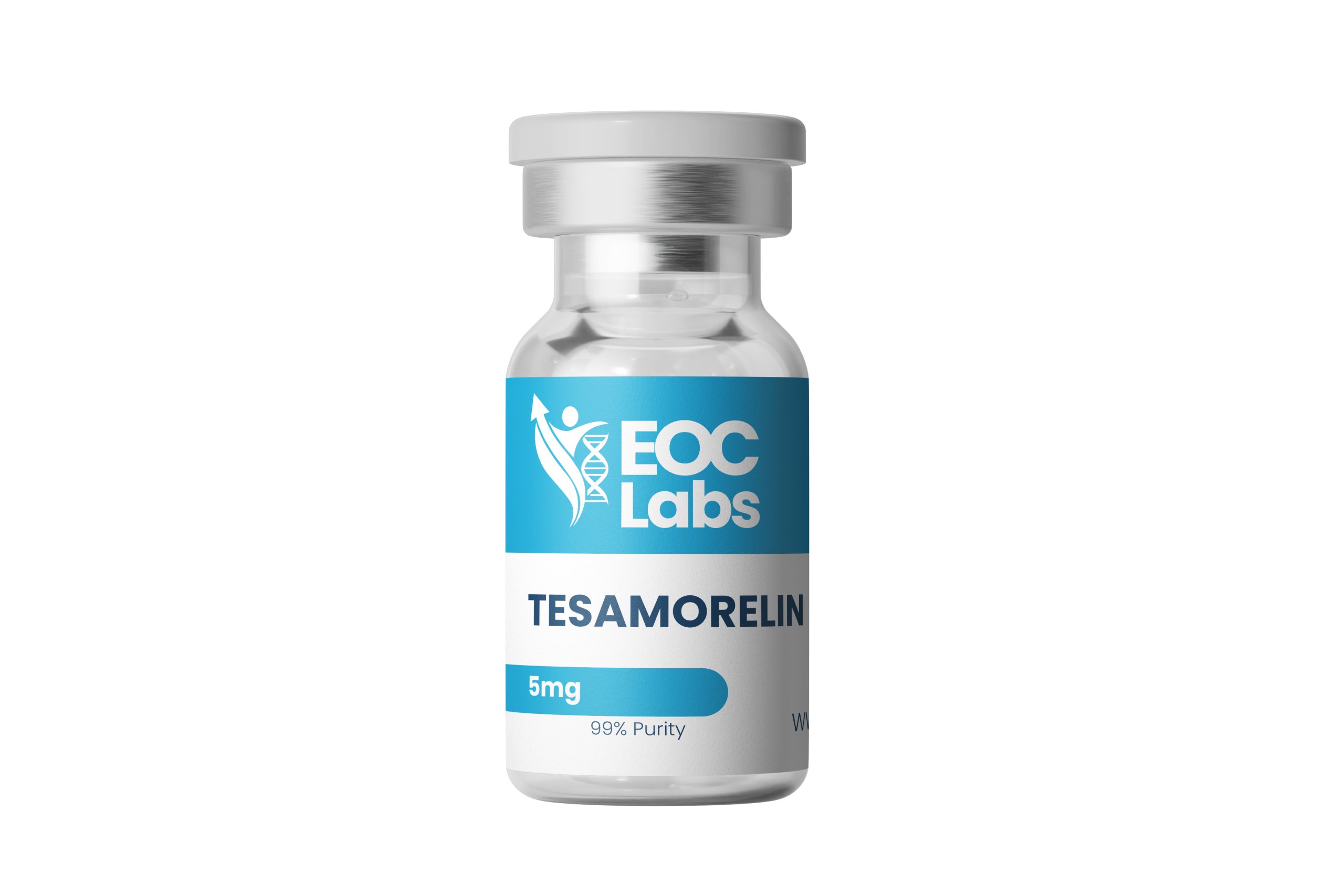
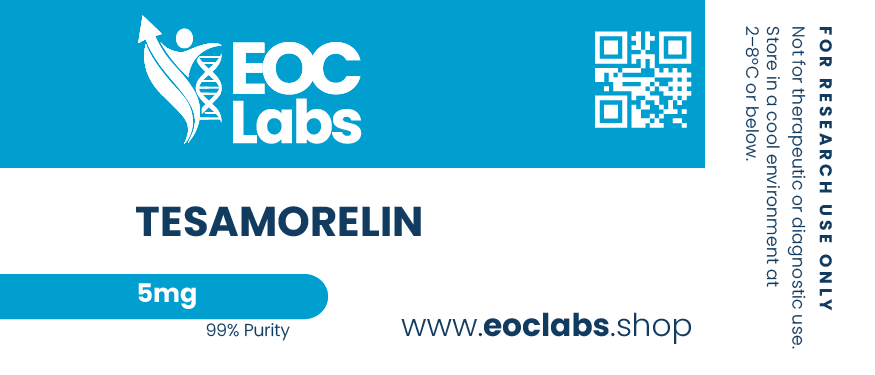
Tesamorelin is a synthetic analogue of human Growth Hormone–Releasing Hormone (GHRH), engineered with an N‑terminal trans‑3‑hexenoic acid modification to improve molecular stability and resistance to enzymatic breakdown. Laboratory research evaluates its ability to stimulate pulsatile GH release, increase IGF‑1, and influence metabolic and body‑composition pathways. Studies explore its mechanistic roles in adipose‑tissue modeling, hepatic signaling, endocrine regulation, and GH/IGF‑1 axis dynamics.
LYOPHILIZED PEPTIDES
This peptide is supplied as a sterile, freeze‑dried (lyophilized) powder to maintain purity, structural integrity, and long‑term stability. No fillers or excipients are added.
RESEARCH APPLICATIONS
1 — Visceral Adipose Tissue (VAT) Modeling
Tesamorelin is widely used in research involving VAT reduction, GH‑mediated lipolytic signaling, and metabolic remodeling pathways. Controlled studies investigate its influence on central fat compartments and endocrine‑regulated metabolic markers.
(References: NEJM VAT research — https://pubmed.ncbi.nlm.nih.gov/20818885/, JAMA metabolic modeling — https://pubmed.ncbi.nlm.nih.gov/21304038/ )
2 — GH / IGF‑1 Axis & Endocrine Studies
Research evaluates Tesamorelin’s selective stimulation of GHRH receptors, pulsatile GH release, and downstream IGF‑1 modulation. Comparative studies differentiate endogenous vs exogenous GH signaling using this peptide as a model compound.
(References: PubMed—https://pubmed.ncbi.nlm.nih.gov/22392532/, Nature—https://www.nature.com/articles/s41582-020-00420-0 )
3 — Hepatic Fat, Lipid Regulation & Metabolic Signaling
Tesamorelin has been used in liver‑fat modeling studies, exploring its effects on hepatic triglyceride turnover, steatosis pathways, and metabolic‑liver biomarkers. These models provide insight into GH‑driven hepatic metabolic regulation.
(References: ScienceDirect—https://www.sciencedirect.com/science/article/pii/S1550413119305336, PubMed—https://pubmed.ncbi.nlm.nih.gov/36638174/ )
4 — Body‑Composition, Muscle, & Energy‑Balance Research
Studies explore Tesamorelin’s potential influence on muscle composition, resting‑energy expenditure, and body‑composition pathways through GH‑mediated protein‑synthesis signaling.
(References: MDPI—https://www.mdpi.com/1422-0067/24/3/2341, PubMed—https://pubmed.ncbi.nlm.nih.gov/36971244/ )
SPECIFICATIONS
Property | Details
Peptide Name | Tesamorelin
Amino Acid Sequence | trans‑3‑hexenoic acid–Tyr–Ala–Asp–Ala–Ile–Phe–Thr–Asn–Ser–Tyr–Arg–Lys–Val–Leu–Ala–Asp–Gln–Leu–Lys–Glu–Lys–Gln–Ala–Gly–Ala–Leu–Arg–Ala–Arg–Leu–NH₂
CAS Number | 218949‑48‑5
Molecular Formula | C221H366N72O67S
Molecular Weight | ~5135.8 g/mol
Appearance | White to off‑white lyophilized powder
Purity | ≥ 99% (HPLC verified)
Solubility | Soluble in bacteriostatic/sterile water
Storage | Store dry at −20 °C; refrigerate after reconstitution
Usage | Laboratory research only
Research Data & References
– VAT & metabolic modeling (NEJM): https://pubmed.ncbi.nlm.nih.gov/20818885/
– GH/IGF‑1 axis studies: https://pubmed.ncbi.nlm.nih.gov/22392532/
– Hepatic fat & metabolic pathways: https://pubmed.ncbi.nlm.nih.gov/36638174/
Research Disclaimer
RESEARCH USE ONLY.
This product is not intended for therapeutic or diagnostic use. EOC Labs products are sold strictly for laboratory research and analytical purposes only. All information provided by EOC Labs, including descriptions, references, and technical data, is intended solely for educational and informational purposes. Statements have not been evaluated by the U.S. Food and Drug Administration (FDA). No claims are made for any medical or consumer application. By purchasing this product, the buyer certifies that it will be handled by qualified professionals in a properly equipped laboratory and used in compliance with all applicable local, state, and federal laws and regulations.


 20% off (first time buyer sign up).
There are no reviews yet.