
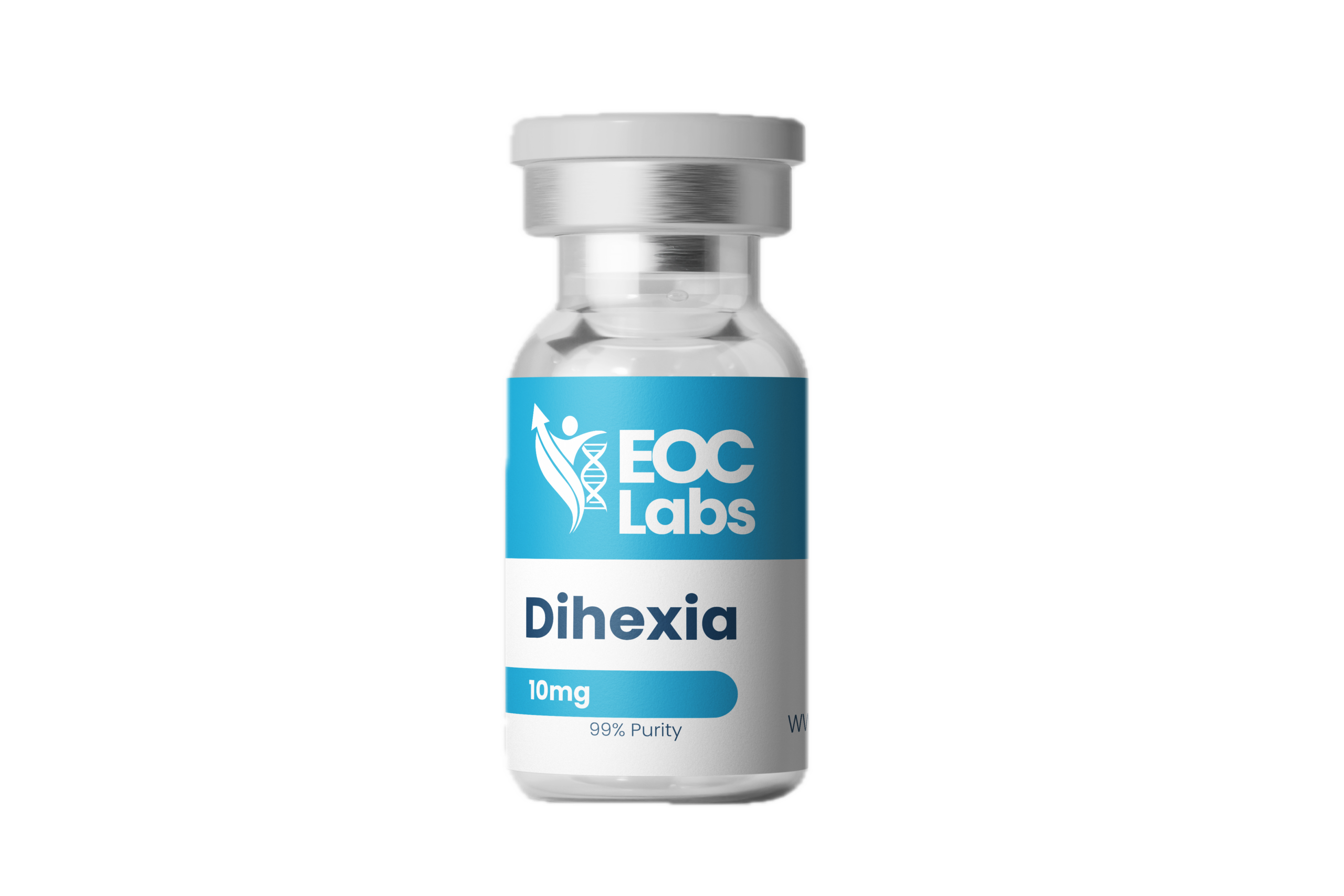
Description
Dihexa
Overview
Dihexa (PNB-0408) is a synthetic hexapeptide derivative of angiotensin IV engineered to enhance stability and receptor interaction relative to endogenous angiotensin fragments. The compound is studied in experimental neuroscience models due to its interaction with the hepatocyte growth factor (HGF) signaling system and its ability to potentiate activation of the c-Met receptor pathway.
In laboratory models, Dihexa has been investigated as a modulator of synaptogenic signaling processes involved in neuronal connectivity and dendritic spine formation. The compound’s small molecular size and lipophilic modifications enable enhanced tissue penetration compared to native angiotensin peptides, making it useful as a research probe in cellular communication and neuroplasticity studies.
Current investigations primarily focus on Dihexa as a tool compound for examining mechanisms involved in synaptic density regulation, neurotrophic signaling cascades, and receptor-mediated intracellular pathways associated with neuronal growth and communication.
Mechanism of Action
Dihexa has been reported to potentiate signaling within the hepatocyte growth factor (HGF) system by facilitating activation of the c-Met receptor tyrosine kinase. HGF is a multifunctional growth factor involved in neuronal survival, synapse formation, and cellular migration.
When HGF binds to the c-Met receptor, it initiates intracellular signaling cascades, including:
- MAPK/ERK pathway activation
- PI3K/Akt signaling
- Cytoskeletal remodeling pathways associated with synaptogenesis
Experimental data suggest that Dihexa may enhance HGF-dependent receptor activation, increasing downstream signaling events associated with dendritic spine formation and synaptic connectivity. In neuronal culture models, these signaling events are associated with increased synaptic marker expression and enhanced neurite outgrowth.
Unlike native angiotensin IV peptides, Dihexa contains structural modifications that improve metabolic stability and receptor interaction, allowing it to function as a molecular probe for studying HGF/c-Met mediated synaptic signaling. The compound’s mechanism remains an area of active investigation and current data are limited to preclinical and in-vitro research models.
Research Applications
- Investigation of HGF/c-Met receptor signaling dynamics
- Synaptic plasticity and dendritic spine formation studies
- Neuronal connectivity modeling in cell culture systems
- Neurotrophic signaling pathway analysis
- Molecular studies of growth factor potentiation
- Experimental models examining synapse density regulation
- Evaluation of intracellular pathways involved in neuronal network formation
Chemical & Molecular Specifications
Compound Name: Dihexa
Alternative Name: PNB-0408
CAS Number: 1401708-83-5
Peptide Class: Angiotensin IV-derived synthetic oligopeptide
Chemical Structure: N-hexanoyl-Tyr-Ile-(6-aminohexanoic acid)-amide
Sequence: Hexanoyl-Tyr-Ile-Ahx-NH₂
Molecular Formula: C27H44N4O5
Molecular Weight: 504.66 g/mol
Monoisotopic Mass: 504.3312 Da
Typical Analytical Purity: ≥99% (HPLC)
Analytical Verification Methods: HPLC and Mass Spectrometry
Lyophilized Peptide
Dihexa is supplied in lyophilized (freeze-dried) form to maximize molecular stability and maintain peptide integrity during storage and transport. Lyophilization removes water under controlled vacuum conditions, minimizing hydrolysis and degradation that can occur in aqueous environments.
Before experimental use, the peptide may be reconstituted in sterile laboratory solvents appropriate for the intended research protocol. Lyophilized presentation allows accurate dosing, extended shelf stability, and improved long-term storage performance compared with pre-mixed solutions.
Storage & Handling (Research Use Only)
- Store lyophilized material at −20 °C or lower.
- After reconstitution, store at 2–8 °C according to laboratory protocol.
- Protect from prolonged light exposure.
- Avoid repeated freeze–thaw cycles.
- Use sterile laboratory techniques during preparation.
- Store in sealed containers to prevent moisture exposure.
References
PMC – HGF/c-Met dependent synaptogenesis and Dihexa potentiation
PubMed – Overview of HGF/c-Met receptor system
PubMed – PNB-0408 angiotensin IV analog study
Alzheimer’s Drug Discovery Foundation – Dihexa evidence summary
Research Disclaimer
RESEARCH USE ONLY.
This product is not intended for therapeutic or diagnostic use. EOC Labs products are sold strictly for laboratory research and analytical purposes only. All information provided by EOC Labs, including descriptions, references, and technical data, is intended solely for educational and informational purposes. Statements have not been evaluated by the U.S. Food and Drug Administration (FDA). No claims are made for any medical or consumer application. By purchasing this product, the buyer certifies that it will be handled by qualified professionals in a properly equipped laboratory and used in compliance with all applicable local, state, and federal laws and regulations.


 20% off (first time buyer sign up).
There are no reviews yet.