
Description
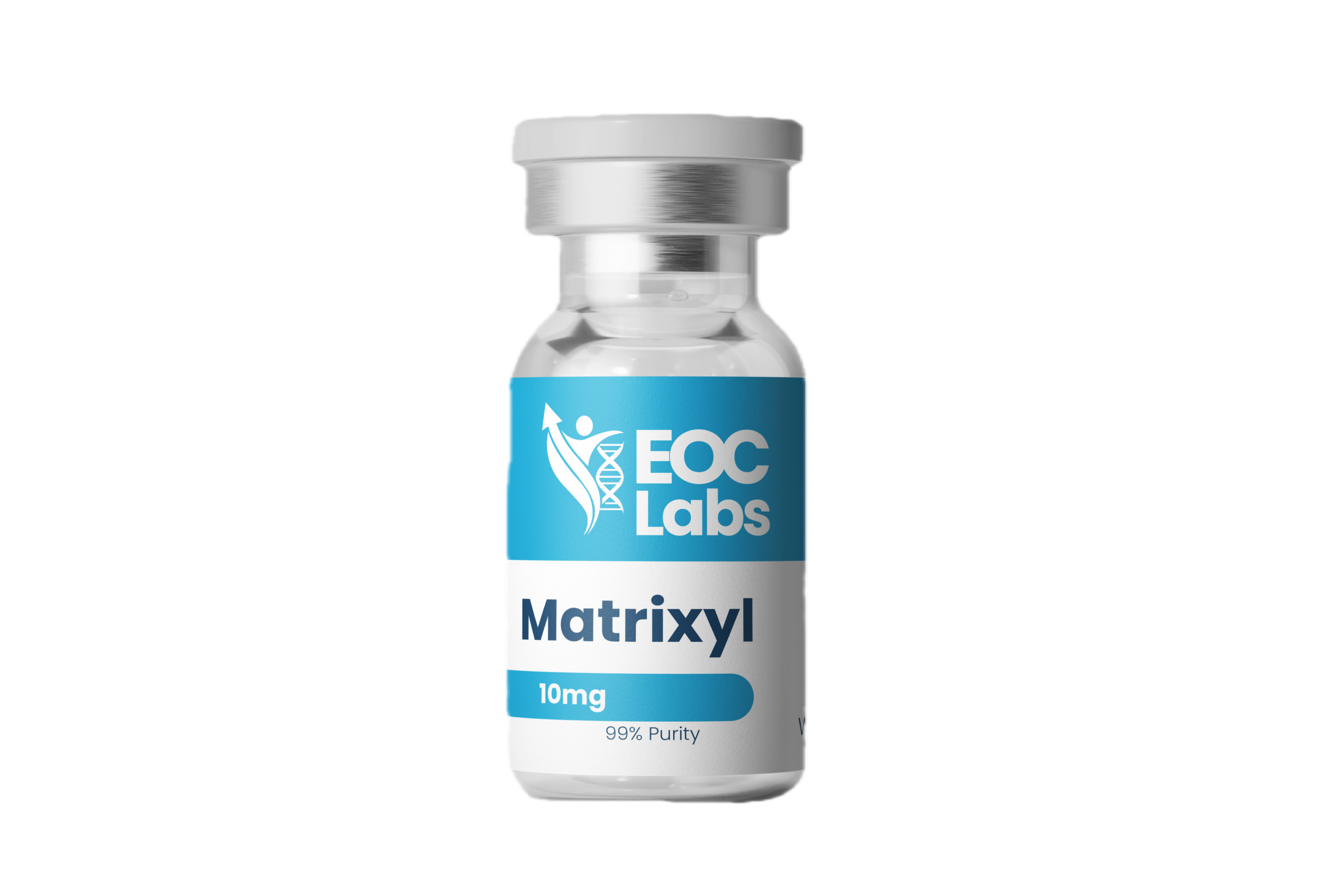
Matrixyl (Palmitoyl Pentapeptide‑4)
Overview
Matrixyl is a synthetic peptide derivative commonly known as Palmitoyl Pentapeptide‑4. It is studied in molecular biology and extracellular matrix research as a signaling peptide involved in pathways associated with dermal matrix protein regulation. Laboratory studies investigate Matrixyl interactions with fibroblast signaling systems and peptide‑mediated communication pathways involved in collagen and extracellular matrix component synthesis.
The peptide consists of a short amino acid sequence derived from collagen fragments linked to a palmitoyl group, which improves stability and cellular interaction in experimental systems. Matrixyl is frequently used in research environments to examine peptide signaling mechanisms associated with extracellular matrix remodeling and cellular protein expression.
Mechanism of Action
In laboratory models, Matrixyl is investigated as a signaling peptide capable of influencing fibroblast activity through pathways associated with extracellular matrix protein regulation. Experimental evidence suggests that peptide fragments derived from collagen can act as signaling molecules that stimulate cellular responses involved in matrix protein synthesis.
Research systems examine Matrixyl interactions with cellular pathways involved in collagen production, extracellular matrix turnover, and fibroblast signaling. These studies utilize the peptide as a molecular probe to explore how peptide signals derived from structural proteins may regulate gene expression and protein synthesis within connective tissue cell models.
Research Applications
- Extracellular matrix signaling studies
- Fibroblast activity and collagen synthesis research
- Peptide‑mediated cell signaling investigations
- Connective tissue molecular biology studies
- Extracellular protein regulation models
Chemical & Molecular Specifications
Compound name: Matrixyl
Alternative name: Palmitoyl Pentapeptide‑4
Peptide sequence: Pal‑Lys‑Thr‑Thr‑Lys‑Ser
Peptide class: Palmitoylated signal peptide
Molecular formula: C39H75N7O10
Molecular weight: 802.05 g/mol
CAS number: 214047‑00‑4
Typical analytical purity: ≥99%
Lyophilized Peptide
This peptide may be supplied in lyophilized (freeze‑dried) form to support molecular stability during storage and transport. Lyophilization removes water under controlled conditions, helping preserve peptide structure prior to reconstitution for laboratory research applications.
Storage & Handling (Research Use Only)
- Store lyophilized material at -20°C or below unless otherwise specified by laboratory protocol.
- Following reconstitution, short‑term storage at 2–8°C is recommended.
- Protect from light and temperature extremes.
- Avoid repeated freeze‑thaw cycles.
- Handle using appropriate sterile laboratory techniques and institutional safety procedures.
References (Research Literature)
PubMed – Palmitoyl pentapeptide extracellular matrix signaling studies
PubMed – peptide signaling in dermal fibroblast research
PubChem – Palmitoyl Pentapeptide‑4 compound listing
ScienceDirect – extracellular matrix peptide signaling overview
Research Disclaimer
RESEARCH USE ONLY.
This product is not intended for therapeutic or diagnostic use. EOC Labs products are sold strictly for laboratory research and analytical purposes only. All information provided by EOC Labs, including descriptions, references, and technical data, is intended solely for educational and informational purposes. Statements have not been evaluated by the U.S. Food and Drug Administration (FDA). No claims are made for any medical or consumer application. By purchasing this product, the buyer certifies that it will be handled by qualified professionals in a properly equipped laboratory and used in compliance with all applicable local, state, and federal laws and regulations.



 20% off (first time buyer sign up).
There are no reviews yet.