

Description
DESCRIPTION
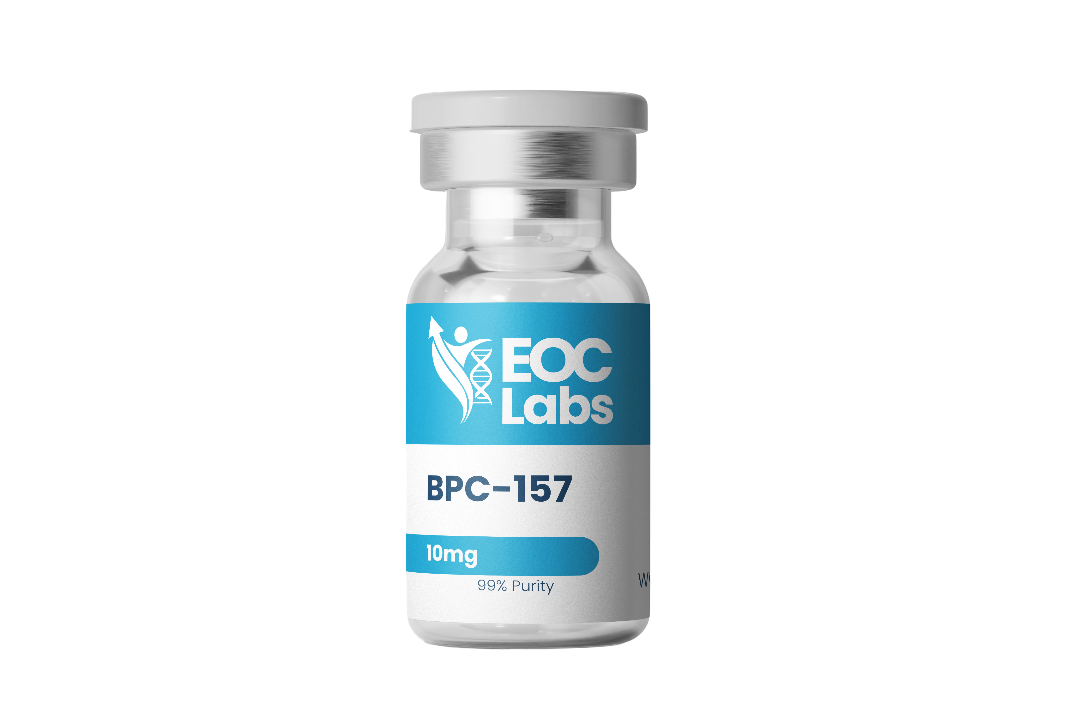
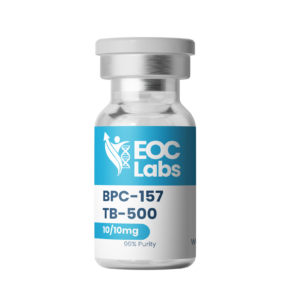
BPC-157 (Body Protection Compound-157) is a stable 15–amino acid peptide extensively studied for its cytoprotective, angiogenic, and regenerative properties. Derived from a naturally occurring gastric protein sequence, it maintains stability under enzymatic and acidic stress, making it suitable for diverse laboratory research conditions. Investigations have explored its influence on microcirculation, collagen organization, fibroblast activity, and nitric-oxide modulation across musculoskeletal, gastrointestinal, vascular, and neural models.
LYOPHILIZED PEPTIDES
These peptides are supplied as a freeze‑dried (lyophilized) powder to preserve purity, molecular stability, and long‑term storage integrity. No fillers or excipients are added during the lyophilization process.
RESEARCH APPLICATIONS
1 — Gastrointestinal Integrity & Mucosal Stability
BPC‑157 has been researched for its ability to support gastric and intestinal lining integrity, stabilize epithelial junctions, and protect microcirculation under inflammatory, oxidative, and chemically induced stress. Models show accelerated healing of gastric lesions and restoration of mucosal barrier proteins. (References: ScienceDirect—https://www.sciencedirect.com/science/article/pii/S0944711320301540, PubMed—https://pubmed.ncbi.nlm.nih.gov/33135667/)
2 — Angiogenesis & Vascular Protection
Preclinical vascular studies indicate that BPC‑157 modulates VEGFR2–Akt–eNOS signaling, enhances endothelial repair, and restores vascular tone under ischemic conditions. Researchers frequently investigate its micro‑capillary growth potential and anti‑thrombotic behavior in models of impaired blood flow. (References: Nature—https://www.nature.com/articles/s41598-020-78676-8, PubMed—https://pubmed.ncbi.nlm.nih.gov/28324077/)
3 — Musculoskeletal & Connective Tissue Regeneration
Studies show increased fibroblast proliferation, improved collagen alignment, and accelerated repair of tendons, ligaments, and skeletal muscle fibers. BPC‑157 has been explored for its ability to enhance GH‑receptor expression and improve functional recovery following mechanical injury. (References: MDPI—https://www.mdpi.com/1422-0067/19/4/1078, PubMed—https://pubmed.ncbi.nlm.nih.gov/29385773/)
4 — Dermal & Wound Healing Applications
BPC‑157 demonstrates pro‑healing activity through enhanced keratinocyte migration, granulation‑tissue formation, and inflammatory cytokine modulation. Its activation of ERK1/2 and FAK‑paxillin cascades supports accelerated wound‑closure models and dermal‑layer regeneration. (References: PubMed—https://pubmed.ncbi.nlm.nih.gov/25950459/, ScienceDirect—https://www.sciencedirect.com/science/article/pii/S0753332219364422)
5 — Neurological & Ocular Research
Research suggests BPC‑157 may promote neuronal survival, preserve retinal thickness, and modulate nitric‑oxide regulation following ischemic or oxidative damage. Investigators evaluate its role in optic‑nerve protection and retinal microvascular stability. (References: Frontiers—https://www.frontiersin.org/articles/10.3389/fphar.2021.632295/full, PubMed—https://pubmed.ncbi.nlm.nih.gov/27677715/)
SPECIFICATIONS
Property | Details
Peptide Name | BPC‑157 (Body Protection Compound‑157)
Amino Acid Sequence | Gly‑Glu‑Pro‑Pro‑Pro‑Gly‑Lys‑Pro‑Ala‑Asp‑Asp‑Ala‑Gly‑Leu‑Val
Molecular Formula | C62H98N16O22
Molecular Weight | 1419.53 g/mol
CAS Number | 137525‑51‑0
Purity | ≥ 99% (HPLC verified)
Appearance | White lyophilized powder
Solubility | Soluble in bacteriostatic water
Storage | Store dry at 2–8 °C; refrigerate ≤ 30 days after reconstitution
Usage | Laboratory research only · Use standard protective protocols
Research Data & References
– Gastrointestinal mucosal protection: https://www.sciencedirect.com/science/article/pii/S0944711320301540
– Angiogenesis & endothelial repair: https://pubmed.ncbi.nlm.nih.gov/28324077/
– Musculoskeletal regeneration mechanisms: https://pubmed.ncbi.nlm.nih.gov/29385773/
– Dermal healing & cytokine modulation: https://pubmed.ncbi.nlm.nih.gov/25950459/
– Neurological/ocular models: https://www.frontiersin.org/articles/10.3389/fphar.2021.632295/full
Research Disclaimer
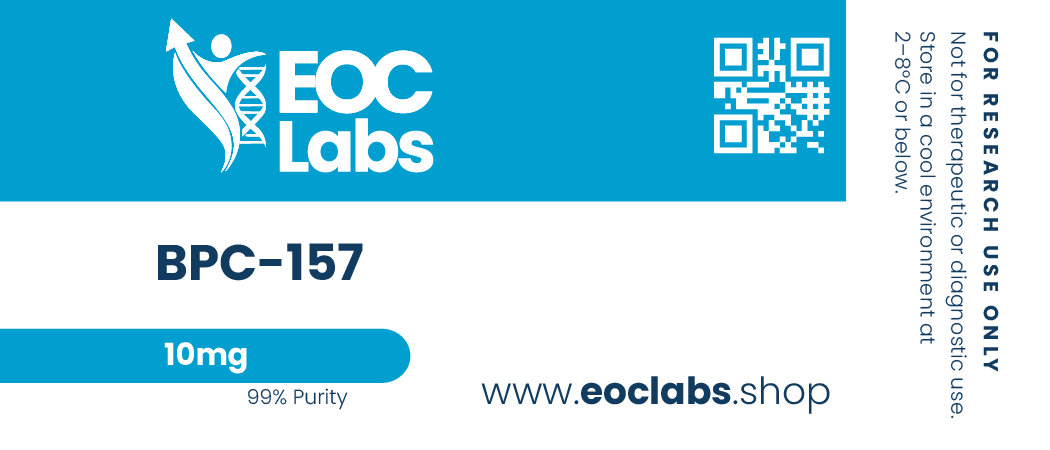
RESEARCH USE ONLY.
This product is not intended for therapeutic or diagnostic use. EOC Labs products are sold strictly for laboratory research and analytical purposes only. All information provided by EOC Labs, including descriptions, references, and technical data, is intended solely for educational and informational purposes. Statements have not been evaluated by the U.S. Food and Drug Administration (FDA). No claims are made for any medical or consumer application. By purchasing this product, the buyer certifies that it will be handled by qualified professionals in a properly equipped laboratory and used in compliance with all applicable local, state, and federal laws and regulations.


 20% off (first time buyer sign up).
There are no reviews yet.